

As marijuana becomes legal in more states, an important question is receiving greater scientific attention, which is, can THC pass from a breastfeeding mother to her baby? The short answer is yes.
THC, or delta-9-tetrahydrocannabinol, is the primary intoxicating compound in cannabis. Whether marijuana is smoked, vaped, or eaten, THC enters the mother’s bloodstream. From there, some of it can move into breast milk.
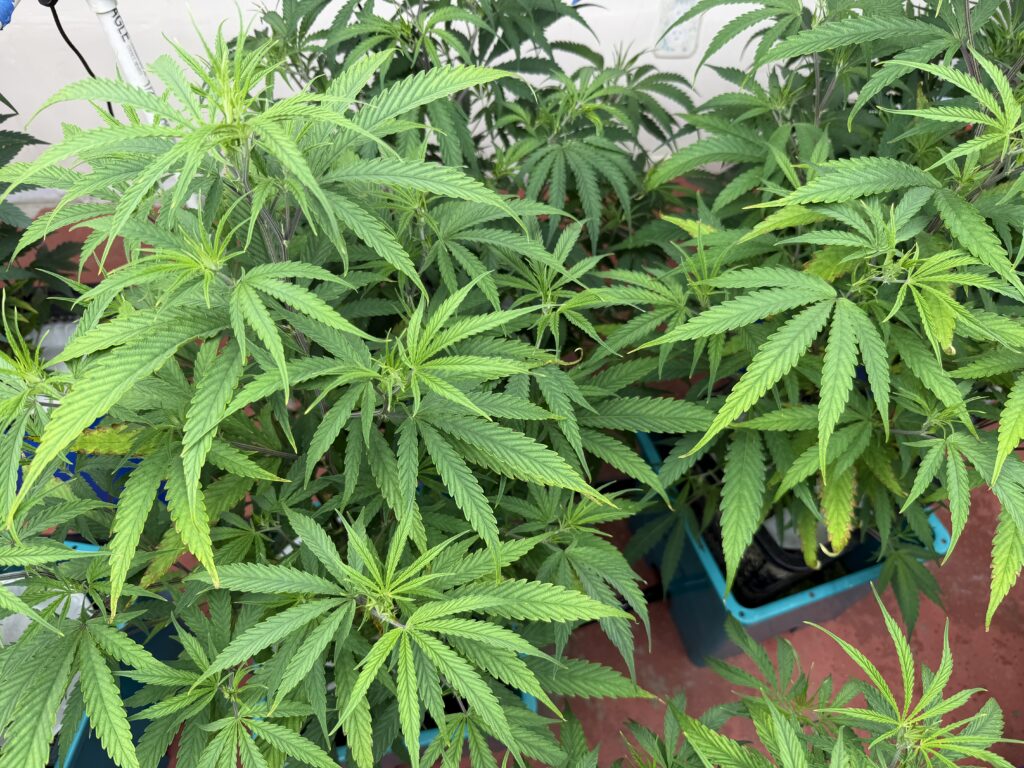
From Our (THC) Females to Our Babies?
How Does THC Collect in Breast Milk?
THC is lipophilic, meaning it is attracted to fat. Human breast milk contains substantial fat, making it a place where THC can accumulate.
A 2021 study of breastfeeding mothers found median THC concentrations of 27.5 nanograms per milliliter in breast milk compared with 3.7 ng/mL in maternal plasma. The median milk to plasma ratio was approximately seven to one. Researchers concluded that THC and CBD can concentrate in breast milk.
This also means THC does not necessarily disappear from milk when a mother’s “high” wears off.
How Much Can Transfer?
Several studies actually estimated how much THC an infant could ingest through breast milk, although most did not directly measure the baby’s blood THC level after feeding. They calculated infant exposure from the THC concentration in milk and estimated milk intake.
The Studies
The clearest numbers are from three studies. Baker et al., 2018 Transfer of Inhaled Cannabis Into Human Breast Milk. Eight breastfeeding women smoked cannabis under study conditions. The researchers estimated that an exclusively breastfed infant would receive an average of about 2.5% of the mother’s weight-adjusted THC dose, with a range of 0.4% to 8.7%. The estimated infant dose was approximately 8 micrograms of THC per kilogram of infant body weight per day.
Wymore et al., 2021 Persistence of Δ-9-Tetrahydrocannabinol in Human Breast Milk study showed that among seven women who abstained after delivery, estimated median daily infant THC doses varied considerably by mother from roughly 0.6 to 6.8 micrograms per day. The study also found that THC could remain in breast milk for weeks because it clears slowly from the body.
And the last study is Holdsworth et al., 2024 Lactation and Cannabis (LAC) Study. This study gave some of the most detailed exposure estimates yet. Across milk samples, the estimated mean THC intake was about 0.0095 mg per feeding that is 9.5 micrograms per feed. Estimated mean daily intake was about 0.0667 mg, or 66.7 micrograms per day. Individual estimated average daily exposures ranged from approximately 1.9 to 196.3 micrograms per day. When adjusted for the infant’s body weight, the median estimate was around 5.7 to 6 micrograms/kg/day.
How Long Does THC Stay in Breast Milk?
This Scale Doesn’t Weigh Time
That question is more complicated. A 2018 study detected THC in breast milk as long as six days after the mother’s last reported cannabis use. Other research involving frequent users has detected THC considerably longer. The National Library of Medicine’s LactMed database reports studies finding THC detectable from six days to more than six weeks, depending on use patterns and the study involved.
A newer 2024 study followed 20 breastfeeding cannabis users. Even after participants abstained for at least 12 hours, THC was still measurable in their milk. After cannabis use, THC concentrations generally increased and, following a single use among certain participants, peaked around two hours later. Repeated cannabis use was associated with greater overall THC exposure in milk.
This is why simply “pumping and dumping” once after using marijuana cannot be assumed to remove THC exposure.
Does the Baby Actually Absorb THC?
The strongest studies fall into two groups which are studies that measured THC in breast milk, and older studies that followed the exposed infants for developmental outcomes. Tennes et al., 1985 Marijuana: Prenatal and Postnatal Exposure in the Human. Researchers followed breastfeeding mothers who used marijuana and compared their infants with unexposed infants. At one year, 27 breastfed infants whose mothers used marijuana during breastfeeding were compared with 35 unexposed infants. The study reported no apparent differences in growth or Bayley motor and mental-development scores. However, the sample was small, many mothers had also used cannabis during pregnancy, and cannabis potency in the early 1980s was considerably different from today’s products.
The next study is Astley & Little, 1990 Maternal Marijuana Use During Lactation and Infant Development at One Year. This is probably the most directly relevant infant-outcome study. It included 136 breastfed infants, 68 of whom were considered exposed to marijuana through breast milk. Cannabis use during the first month of breastfeeding was associated with lower motor-development scores at one year, although mental development was not similarly affected. The authors could not completely separate breastfeeding exposure from prenatal cannabis exposure. These studies are over 30 and 35 years old, so they need a bit of updating.
There is evidence indicates that at least some THC consumed through breast milk can be absorbed and metabolized by an infant. LactMed reports detection of THC metabolites in infants exposed through breastfeeding, although the amount reaching an individual baby can vary considerably. What scientists do not yet know is EQUALLY important.
Research directly linking THC exposure through breast milk alone to long term developmental problems remains LIMITED. Many studies are small, and separating exposure through breast milk from cannabis exposure during pregnancy can be difficult. The Academy of Breastfeeding Medicine describes the evidence on long term infant effects as limited.
Let’s Stay Natural
What Do Medical Organizations Recommend?
The CDC advises breastfeeding mothers to avoid marijuana and CBD products because cannabinoids can pass into breast milk and the long term effects remain uncertain.
ACOG’s updated 2025 guidance likewise recommends stopping cannabis during lactation. However, it also emphasizes an important distinction that continued cannabis use is not automatically a reason to stop breastfeeding, because breastfeeding itself has significant health benefits.
The science therefore gives us a clear conclusion that THC can move from a mother’s bloodstream into breast milk, remain there longer than many people expect, and ultimately reach the nursing infant. What researchers are still working to determine is exactly what that exposure means for a baby’s developing brain and long-term health.
Other Thoughts
But, if long term effects for the baby are still unclear, THC or CBD should be looked at as alternatives for women that develop postpartum depression. These are healthy alternatives. Otherwise women could be offered harsh medications that come along with major side effects, or they could go untreated.
That is why you grow your own. get seeds and clones to start.